
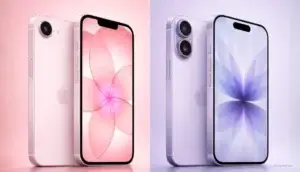





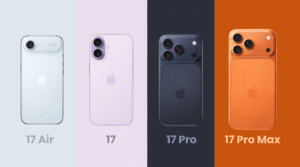
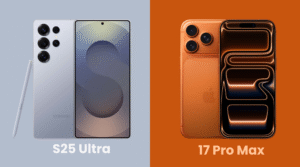

The launch of the iPhone 17 and iPhone 17e marks a major shift for Apple. Instead of just making small yearly updates, the company is now building hardware specifically to handle powerful AI. By using the new A19 “Tilos” chip, smoother screens, and Apple’s own custom cellular chips, the 2026 lineup is designed to balance two goals:
- Providing enough power for advanced “AI agents”
- Keeping prices affordable for several types of buyers around the world.
Pricing and Global Strategy
By selling the iPhone 17e for $599, Apple is changing how it thinks about “budget” phones. In the past, cheaper iPhones usually used old parts from previous years. However, the 17e is different because it uses the brand-new A19 chip.
Apple is doing this so that every new phone they sell can run“Apple Intelligence”. They want as many people as possible to have AI-ready phones.
On the other hand, the standard iPhone 17 costs $799. It acts as a middle ground between the budget model and the expensive “Pro” models. For the extra $200, users get features that used to be exclusive to the Pro series, like the ProMotion screen (which makes movement look extra smooth) and faster battery charging. This model is built for people who want a high-quality screen and a better camera but don’t want to pay $1,000 or more for the Pro Max or the ultra-thin “iPhone Air.”
| Economic and Storage Configuration | iPhone 17e | iPhone 17 |
| Starting Market Price (MSRP) | $599 | $799 |
| Base Storage Configuration | 256GB NVMe | 256GB NVMe |
| Maximum Storage Option | 512GB NVMe | 512GB NVMe |
| Memory (RAM) Allocation | 8GB LPDDR5X | 12GB LPDDR5X |
| Value Metric | Highest performance-per-dollar | Flagship features at a mid-tier price |
Design and Build Quality
The design of the 2026 lineup shows that Apple is focusing on making phones that are comfortable to hold and built to last. Both the iPhone 17 and iPhone 17e share a similar look. However, they are of varied sizes.
- The iPhone 17 is slightly larger
- The iPhone 17e is more compact
Making them feel distinct in your hand despite looking like they belong to the same family.
Dimensions and Mass Distribution
The iPhone 17 has grown to a 6.3-inch display size, enabled by advanced manufacturing techniques that reduce bezel thickness. This shift allows for a larger viewing area while maintaining a width of 71.5 mm
The 17e retains the classic 6.1-inch form factor, making it the preferred choice for a segment of the market that prioritizes one-handed usability and pocketability.
| Physical Dimensions | iPhone 17e | iPhone 17 |
| Chassis Height | 146.7 mm (5.78 in) | 149.6 mm (5.89 in) |
| Chassis Width | 71.5 mm (2.82 in) | 71.5 mm (2.81 in) |
| Device Thickness | 7.80 mm (0.31 in) | 7.95 mm (0.31 in) |
| Device Weight | 170 grams (5.96 oz) | 177 grams (6.24 oz) |
| Protective Glass | Ceramic Shield 2 | Ceramic Shield 2 |
| Ingress Protection | IP68 (6m depth) | IP68 (6m depth) |
Both devices utilize Ceramic Shield 2 for the front display, a material science advancement that increases scratch and drop resistance by a factor of three compared to the first-generation Ceramic Shield. This durability is reinforced by an IP68 rating, allowing both phones to withstand submersion in up to 20 feet of water for 30 minutes.

Interactive Features: The Notch vs. Dynamic Island
The biggest visual difference between these two phones is how they handle the front camera and face-scanning sensors.
- The iPhone 17e uses the classic “notch” at the top of the screen. This is the same design used on older models like the iPhone 14. While it works perfectly for Face ID and taking selfies, it is a “static” part of the screen.
- In contrast, the iPhone 17 features the Dynamic Island. This is a small, pill-shaped cutout that actually changes shape to show you information. It can expand to show you a timer, your music controls, or how far away your Uber is, all without we have to open a different app. For people who do a lot of things at once, the Dynamic Island makes multitasking much easier and more interactive.
Control Interface: Action and Camera Buttons
- To make the phones easier to use, Apple has removed the old “mute” switch on both models. In its place is the new Action Button. You can program this button to do whatever we need most; like turning on the flashlight, starting a voice memo, or opening a specific app with just one click.
- However, the iPhone 17 has an extra feature that the cheaper model does not: the Camera Control button. This special button is sensitive to touch and pressure. We can use it to quickly open the camera, slide your finger to zoom in, or press lightly to focus your shot. By leaving this button off the iPhone 17e, Apple keeps that phone simpler and easier to use for people who do not need professional camera tools.
Display Technology and Visuals
The biggest difference you will notice when using these phones every day is the screen. Both the iPhone 17 and iPhone 17e use “Super Retina XDR” screens. This means they both have incredibly sharp details, deep blacks, and bright colors that look great even in sunlight.
ProMotion and Screen Smoothness
The iPhone 17 marks a major change because it is the first “standard” iPhone to get ProMotion technology. This means the screen is much smarter about how it moves. It can change its “refresh rate”,how many times it updates every second, anywhere from 1Hz to 120Hz.
- When we’re gaming or scrolling: The screen hits 120Hz, making everything look incredibly fluid and smooth.
- When the screen is still: It drops all the way down to 1Hz to save battery life.
- Always-On Display: Because it can go so low, the iPhone 17 can keep the time and our notifications visible all the time without draining your battery.
The iPhone 17e, however, stays at a fixed 60Hz. While this is perfectly fine for basic things like texting or checking Facebook, it won’t feel as “fast” or smooth as the iPhone 17. If we are used to a high-speed screen, the 17e might feel a little laggy by comparison, even though it has a very powerful chip inside.
Screen Brightness and Outdoor Use
How well we can see our screen outside is a major factor in how a phone performs. The iPhone 17 takes a huge lead here. It can reach a peak brightness of 3,000 nits, which is the same as the most expensive “Pro” models.
| Display Metric | iPhone 17e | iPhone 17 |
| Typical Brightness (SDR) | 800 nits | 1,000 nits |
| Peak Brightness (HDR) | 1,200 nits | 1,600 nits |
| Peak Outdoor Brightness | 1,200 nits | 3,000 nits |
| Resolution | 2532 x 1170 | 2622 x 1206 |
| Pixel Density | 460 ppi | 460 ppi |
| Color Gamut | P3 Wide Color | P3 Wide Color |
Silicon Performance: The A19 Architecture
The brain of these new phones is the A19 chip, codenamed “Tilos.” It is built using a highly advanced manufacturing process (TSMC’s 3-nanometer N3P), which allows Apple to pack more power into a tiny space while using less battery.
CPU and Neural Engine Analysis
Both the iPhone 17 and 17e feature a 6-core CPU configuration, consisting of two performance cores capable of reaching 4.26 GHz and four efficiency cores operating at up to 2.6 GHz. This ensures that for most CPU-bound tasks, such as web browsing, document editing, and basic app launches, there is no performance gap between the two devices.
| CPU Benchmark (Geekbench 6) | iPhone 17e | iPhone 17 |
| Single-Core Average Score | 3,320 | 3,319 |
| Multi-Core Average Score | 9,241 | 9,249 |
| Fabrication Process | 3nm (N3P) | 3nm (N3P) |
| Performance Core Clock | 4.26 GHz | 4.26 GHz |
GPU Core Binning and Graphics Fidelity
While both the iPhone 17 and 17e use the A19 chip, they are not exactly the same. Apple uses a process called “binning” to separate them:
- iPhone 17: This version has a 5-core GPU, giving it more power for high-end gaming and heavy video editing.
- iPhone 17e: This version has a 4-core GPU (one less core). It is still incredibly fast for daily tasks, but it is slightly less powerful for intense 3D graphics.
| GPU and RAM Metrics | iPhone 17e | iPhone 17 |
| GPU Core Count | 4 Cores | 5 Cores |
| Metal Score (Geekbench) | ~31,000 | ~37,000 |
| AnTuTu Score (Estimated) | ~2,150,000 | 2,250,422 |
| RAM Capacity | 8GB LPDDR5X | 12GB LPDDR5X |
| Memory Bandwidth | 68.26 GB/s | 68.26 GB/s |
Memory and Longevity
The most significant difference for how long these phones will last is their RAM.
The iPhone 17e comes with 8GB of RAM. This is the bare minimum needed to run Apple’s new AI features in 2026. On the other hand, the iPhone 17 jumps to 12GB of RAM (a 50% increase).
Why does this matter?
AI works like a brain that needs a large “workspace” to think.
- Better Multitasking: With 12GB, the iPhone 17 can keep more apps open at once and switch between them instantly without them restarting.
- Smarter AI: More RAM allows the phone to handle bigger, more complex AI tasks, like advanced Siri requests, much faster.
- Future-Proofing: While 8GB works fine today, future updates to the iPhone’s software (iOS) will require even more memory.
If you plan on keeping your phone for five years or more, the iPhone 17 is the much better choice. The iPhone 17e might start to feel slow or “bottlenecked” in a few years as AI features become more demanding.
Camera Systems: Pro Features vs. Daily Essentials
The camera is one of the biggest reasons for the $200 price jump. While both phones take great everyday photos, the iPhone 17 is built for people who want more creative options and “pro-level” features.
The Main Lens: High Quality for Everyone
Both phones use a 48MP Fusion main camera.
- Day-to-day use: For standard portraits or social media posts, both phones will look almost identical.
- The “Secret” Zoom: Even without a dedicated zoom lens, both use a trick called “sensor cropping” to give you high-quality 2x zoom that looks sharp and clear.
The iPhone 17’s “Ultra-Wide” Advantage
The iPhone 17 has a second 48MP Ultra-Wide lens that the 17e does not have. This one lens adds three major features:
- Macro Photography: We can take extreme close-ups of tiny things, like the detail on a flower or a piece of jewellery.
- Spatial Media: We can record 3D videos and photos that you can actually “step into” if you ever use an Apple Vision Pro headset.
- Big Group Shots: It lets us fit much more into the frame, perfect for wide landscapes or group photos in tight rooms.
Better Selfies with “Center Stage”
The front camera is also a major upgrade on the iPhone 17:
- Higher Resolution: It has an 18MP camera, while the 17e uses a standard 12MP one.
- Center Stage: This feature automatically keeps you in the middle of the frame during video calls, even if you move around.
- Smart Framing: It can even detect when more people join your selfie and “zoom out” automatically so no one is cropped out.
| Camera Feature | iPhone 17e | iPhone 17 |
| Rear Primary Sensor | 48MP Fusion (f/1.6) | 48MP Fusion (f/1.6) |
| Rear Ultra-Wide Sensor | None | 48MP Fusion Ultra-Wide |
| Front Sensor | 12MP TrueDepth | 18MP Center Stage |
| Optical Zoom Range | 0.5x, 1x, 2x (Virtual) | 0.5x, 1x, 2x |
| Macro Support | No | Yes |
| Spatial Capture | No | Yes |
| Cinematic / Action Mode | Limited | Full Support |
Networking and 5G: Apple’s New Technology vs. Proven Speed
Apple is starting to use its own custom-made parts to handle 5G and Wi-Fi.
The Apple C1X Modem (iPhone 17e)
The iPhone 17e uses Apple’s own C1X 5G modem. This is a major milestone because it is a chip designed entirely by Apple to be extremely efficient.
- Better Battery: This chip is built to use 30% less power, which helps your phone stay charged longer when you are using mobile data.
- The Trade-off: While it is twice as fast as Apple’s first-generation modem, it does not support mmWave 5G. This is a special, ultra-fast type of 5G found in very crowded places like stadiums or big city centers. In those specific spots, the 17e might not reach the “super speeds” that more expensive models can.
The Qualcomm X80 and Wi-Fi 7 (iPhone 17)
The iPhone 17 sticks with the Qualcomm Snapdragon X80 modem, which is currently the gold standard for speed.
- Maximum Speed: It supports all types of 5G, including the super-fast mmWave. If you live in a big city with great 5G coverage, you will notice faster downloads on this model.
- Stronger Signal: It uses AI to help you keep a solid connection even in areas where the signal is usually weak.
- Wi-Fi 7: Both phones use Apple’s new N1 chip, which brings Wi-Fi 7 to the iPhone. This means if you have a modern router at home, your Wi-Fi will be faster and much more reliable, even when lots of devices are connected at once.
| Connectivity Feature | iPhone 17e | iPhone 17 |
| Cellular Modem | Apple C1X | Qualcomm Snapdragon X80 |
| 5G Technology | Sub-6GHz Only | Sub-6GHz + mmWave |
| Wi-Fi Support | Wi-Fi 6 | Wi-Fi 7 |
| Bluetooth Support | Bluetooth 5.3 | Bluetooth 6 |
| UWB Generation | 1st Gen UWB | 2nd Gen UWB |
| Cellular Speed Gain | 2x over C1 | 50% over X75 (Theoretical) |
Battery Life and Charging Speeds
Even though the iPhone 17e has a physically larger battery (4,005 mAh) compared to the iPhone 17 (3,692 mAh), it does not necessarily last longer.
Why the Bigger Battery in the 17e?
The iPhone 17e needs that extra capacity because its screen and hardware are less efficient. While the iPhone 17 can slow its screen down to save power, the 17e stays at a constant speed, which uses more energy over time.
- iPhone 17e: Up to 26 hours of video playback.
- iPhone 17: Up to 30 hours of video playback.
Charging: A Big Difference in Speed
If you are in a hurry, the iPhone 17 has a clear advantage in how fast it gets back to a full charge.
- Wired Charging: The iPhone 17 can hit 50% battery in just 20 minutes (using a 40W adapter). The iPhone 17e takes 30 minutes (using a 20W adapter) to reach the same level.
- Wireless Charging (MagSafe): This is the first time the budget model supports MagSafe, which is great news! However, it is limited to 15W, while the iPhone 17 supports faster 25W wireless charging.
Laboratory tests show that the iPhone 17 reaches peak temperatures of around 39.5°C (103.1°F) during 40W charging sessions, which is approximately 2-3°C warmer than previous generations but still within safe operational limits.
| Battery and Power Metric | iPhone 17e | iPhone 17 |
| Battery Capacity (Approx.) | 4,005 mAh | 3,692 mAh |
| Video Playback Rating | Up to 26 Hours | Up to 30 Hours |
| Streaming Video Rating | Up to 21 Hours | Up to 27 Hours |
| Max Wired Fast Charge | 20W | 40W |
| Max MagSafe Charge | 15W | 25W |
Price and Value
- iPhone 17e: Starts at $599 for 256GB of storage. This is widely considered a “best value” pick for users who want a modern iPhone without paying flagship prices.
- iPhone 17: Starts at $799 for 256GB of storage. You are paying $200 more for a vastly better screen, an extra camera, and faster charging.
Which One Should We Buy?
Choose the Apple iPhone 17e if:
You want the most affordable way to get a brand-new iPhone with Apple Intelligence. It is perfect forcasual users who mostly use their phones for social media, texting, and standard photos.
Choose the Apple iPhone 17 if:
You want the best possible screen and more versatility for photography. If you play a lot of games or spend a lot of time outdoors, the brighter, smoother 120Hz display is worth the extra $200.